Visualizzazione post con etichetta polymer clay. Mostra tutti i post

17 dicembre 2011

Calendario dell'Avvento - Giorno 17

CALAMITA TRONCHETTO DOLCE
Yule Log magnet


Una dolce calamita, da regalare o da mettere sul frigo :)
A sweet magnet to give as a present or to put on the fridge :)

Materiale
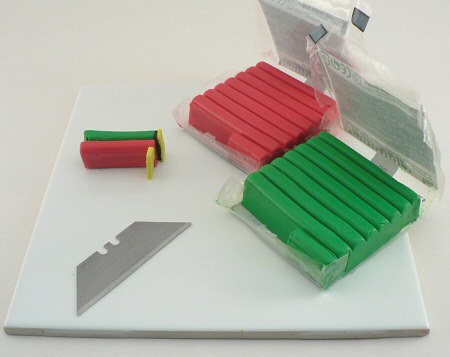
- pasta sintetica bianca, gialla, marrone, verde, rosso
- cartoncino oro
- centrino di plastica
- calamita piatta
- lametta o taglierino
- punta metallica (va bene un ago da lana)
- colla vinilica
- macchina per la pasta o matterello

You will need
- white, yellow, brown, green, red polymer clay
- golden cardboard
- plastic doily
- magnet
- cutter
- metallic pin
- glue
- pasta machine or rolling pin


Lavorate la pasta sintetica bianca e stendetela in una sfoglia alta circa 0,2 cm aiutandovi con la macchina per la pasta o il matterello (da non usare più per il cibo!). Fare lo stesso con la pasta gialla.
Condition the white clay and make a sheet of 0,2 cm (0.1 in) thick with pasta machine or rolling pin (do not use those ones for food!). Repeat with the yellow clay.


Arrotolate insieme la sfoglia bianca e quella gialla poi rotolate su un piano.
Roll together white and yellow clay and then roll them on a table.


Tagliate le estremità del rotolo.
Cut the ends of the roll.


Lavorate la pasta sintetica marrone e stendetela in una sfoglia alta circa 0,2 cm e ricoprite con questa il rotolo di pasta gialla e bianca.
Condition the brown clay and make a sheet of 0,2 cm (0.1 in) thick. Cover the white – yellow roll whit the brown sheet.


Tagliate il rotolo in due parti e rotolatele. Una deve essere più sottile dell'altra. Tagliate i due rami e uniteli a Y.
Cut the roll in two branches, one of them thinner. Cut the ends and join in Y shape.


Con la punta metallica scavate la corteccia del tronchetto e punzecchiate le parti gialle.
With metallic pin press on the brown bark of the log and on the yellow surfaces.


Stendete la pasta verde in una sfoglia alta circa 0,2 cm e con la lametta tagliate due foglie di agrifoglio.
Make a sheet of 0,2 cm (0.1 in) thick with green clay and cut two Holly leaves.


Create tre palline di pasta sintetica rossa e unite tuti i pezzi come nella foto. Cuocete in forno a 120-130° C (seguite le istruzioni indicate sulla confezione di pasta sintetica).
Make three little balls from red polymer clay and join all the pieces. Bake in the oven in according to the instructions on the package.


Tagliate un cerchio di cartoncino dorato a misura del tronchetto e incollate la calamita sotto.
Cut a circle from the golden carboard and glue the magnet below.


Incollate tronchetto, centrino e cartoncino e lasciate asciugare.
Glue the log, the doily and the cardboard together and let dry.


La calamita è pronta!
The magnet is ready!

Solo per uso personale - Only for personal use


Tutorial by Mairitales

25 settembre 2011

I mille usi della pasta polimerica


[English version]
Chi si accosta per la prima volta alle paste sintetiche (o polimeriche) come Fimo, Cernit, Premo, Kato, Scupley ecc., spesso non immagina i mille utilizzi di questa materia sorprendente, ed invece le possibilità sono davvero infinite, limitate solo dalla vostra creatività.


Le paste sintetiche sono materiali termoindurenti venduti in forma solida o liquida, a base di PVC e completamente atossici. In passato, alcune marche di paste sintetiche contenevano sostanze (ftalati) che, se bruciate, potevano sprigionare sostanze tossiche. Tuttavia, le nuove formulazioni hanno eliminato questo spiacevole inconveniente. Sono in genere vendute in panetti o flaconi (nel caso delle paste liquide) di grammatura variabile e di diversi colori. Non tutte le paste sintetiche sono adatte ad ogni scopo: ad esempio alcune marche producono paste con particolari proprietà fisiche (elasticità e resistenza agli urti) che le rendono preferibili per la creazione di gioielli, altre sono più adatte ai lavori di precisione, altre ancora hanno una migliore resa cromatica e così via.

Le deliziose bambole di atelierpompadour

Essendo materiali termoindurenti, per fare in modo che la creazione modellata mantenga la forma che le abbiamo conferito, è necessario che sia cotta in forno a specifiche temperature (variabili a seconda della marca di pasta sintetica utilizzata).
Prima della cottura, le paste polimeriche si prestano ad essere utilizzate assieme a moltissimi altri materiali come sfoglie metalliche sottilissime, pigmenti, microsfere, colori acrilici, tempere, gessetti, strass, paillettes, perline, glitter, addirittura make up, per realizzare effetti vari ed originali. Gli oggetti in pasta sintetica, inoltre, possono essere trattati anche dopo la cottura, con risultati di volta in volta diversi: possono essere  dipinti, forati, "glassati" (con l'aiuto di pasta polimerica liquida al alto indice termico e pistola al calore), verniciati, lucidati a mano o a macchina.
 
Le fantastiche miniature di Mairi


Molti artisti delle paste sintetiche, inoltre, amano decorare le creazioni cotte con rilievi o incisioni, che possono essere realizzate a mano oppure con l'ausilio di dispositivi elettrici come il Dremel Engraver. Anche la pasta polimerica liquida può essere miscelata a colori, pigmenti, glitter, pagliuzze ecc, e può  essere sfruttata per le tecniche di inclusione (utilizzate anche con la resina), con le quali un oggetto viene incorporato nel medium liquido e vi rimane "intrappolato" quando la creazione viene cotta. Inoltre può essere usata per rifinire lavori in pasta polimerica (ad esempio con la glassatura, cui abbiamo già accennato), può essere colata in stampi ed impiegata per il trasferimento di immagini, per citare solo alcuni esempi.

I simpaticissimi pupini di Biberta

Riguardo a cosa è possibile realizzare con questo fantastico medium, l'elenco è virtualmente infinito! Oltre a gioielli, statuine, soprammobili, accessori, imitazioni di pietre dure e di altri materiali naturali, bottoni, spille, fermacapelli, è possibile realizzare bambole, componenti di arredo, copertine di libri o di album, penne, miniature e tanto, tanto altro.
Probabilmente la gioielleria e la creazione di componentistica per le dolls'houses sono due degli impieghi più noti al pubblico femminile, ma anche i maschietti non disdegnano di usare le paste polimeriche per il modellismo o la costruzione di diorami. Per le riproduzioni in scala, ad esempio, le paste liquide si prestano molto bene ad essere usate per simulare liquidi (bevande, zuppe, acqua corrente...) o elementi paesaggistici (laghetti, fiumiciattoli...).

I bellissimi bottoni di EtsyPeekaBoo


Non c'è che dire, questo fantastico materiale si presta ad assumere tutte le forme suggerite dalla vostra fantasia!
Una lettura di sicuro interesse per approfondire questo argomento è "The Art of Polymer Clay: Designs and Techniques for Making Jewelry, Pottery, and Decorative Artwork" di Donna Kato.

Scritto da: La Pi

1 settembre 2011

Pigments and polymer clay

Have you ever seen the movie "The girl with a pearl earring"?
It's about the life and work of the Flemish painter Johannes Vermeer and gives us an idea of ​​the great work behind the preparation of a painting. At that time, every artist used to prepare his own colors, working the raw material that had to be finely minced, washed (purified) and then mixed. They say that Vermeer's favorite color was ultramarine blue, extracted from the precious lapis lazuli, at which we ascribe the enchanting shade of the girl with the pearl earring's turban.


Pigments are substances that can give a color to a material. They are known since the Stone Age and may be organic, inorganic, natural or synthetic. Pigments are formed by very thin particles (of the order of microns) sold in powder, paste or dispersed into an appropriate medium. They can be used in many ways: in paints, in the plastic industry, in the synthetic fabrics, in the cosmetic industry and so on.


Talking about hobbies, pigment brands disposible on the market allow you to create very special effects, imitation of ancient metal, of precious stones, of leather and Raku porcelain, reproducing the effect of the hammered metal and are used in cartonnage, in modeling with polymer clay, in candle making, in decoration, in painted decoupage and in many other techniques.

Leaf pendant by Celidonia


Almost all companies that sell products for hobbyists offer a line of metallic, matte, satin, perlescent (and so on) pigments at affordable prices. These are synthetic products, definitely not as precious as Vermeer's ultramarine blue, but with a great performance nonetheless.
Working with polymer clay, pigments can be used both mixing them into the clay or applying them on the surface of the uncured creation with a brush, a sponge pad or even with your fingers to create glows, gradients, pearlescences etc.

The owl and the moon earrings by VeraCreations
The creation has to be cured and then the surface can be protected with transparent varnish to prolong the life of the colors. However, many pigments lose their metallic finish when varnished, so the advice is to always do a test on a scrap piece before to focus on the creation, so that anyone can find the right compromise between color performance and durability.

Dragon pendant by Mairitales


Happy crafting with pigments and polymer clay!

25 agosto 2011

The thousands uses of polymer clay


Who gets in touch for the first time with polymer (or syntetic) clay such as Fimo, Cernit, Premo!, Kato, Scupley etc, often have no idea of the myriad uses of this amazing material, but in fact the choices are endless, limited only by your creativity.


Polymer clay are thermosetting materials sold in solid or liquid form, made from PVC and completely non-toxic. In the past, some brands of clay contained synthetic chemicals (phthalates) which, if burned, could release toxic substances. However, new formulations have eliminated this inconvenience. They are usually sold in blocks or bottles (in the case of liquid clay) with a weight variable and different colors.
Not all polymer clay brands are suitable for every purpose: for example, some brands produce clay with special physical properties (elasticity resilience) that make them preferable for the creation of jewelry, others are more suitable for precision works, others have better color rendering and so on.

The stylish dolls by atelierpompadour


Since thermosetting materials, to ensure that the creation modeled maintains the form that we have given, it must be baked in the oven at specific temperatures (depending on the brand of polymer clay used).
Before baking, polymer clay is suitable to be used in conjunction with many other materials such as thin metal foils, pigments, beads, acrylic paint, tempera, chalk, rhinestones, sequins, spheres, glitter, and even make-up, to achieve various and original effects. Polymer clay objects can be treated even after baking, obtaining different results: they can be painted, sanded, "glassed" (with liquid polymer siutable to be be cured at high temperatures and a heat gun), varnished, polished by hand or by machine.

The fantastic miniatures by Mairi


Many polymer clay artists also love to decorate their cured creations with reliefs or engravings, which may be realized by hand or using electrical devices such as the Dremel Engraver. Liquid polymer clay can also be blended with color, pigments, glitter, sequins, etc., and can be used for inclusions (as the resin). Inclusion is a tecnique that allows you to embed an object into the liquid medium; after baking, it will remain incapsulated into the clay. It can also be used to finish polymer clay works (for example with the "glassing", which we have already mentioned), can be cast in molds and used for the transfer of images, to name just a few examples.

The cute "pupini" by Biberta


The list of the way in which is possible to use this fantastic medium is virtually endless! In addition to jewelry, figurines, ornaments, accessories, imitation of precious stones and other natural materials, buttons, brooches, hair clips, you can make dolls, pieces of furniture, book or photoalbum covers, pens, miniatures and much, much more.
Probably two of the most famous uses of polymer clay amongst women are the jewelry and the creation of dolls'houses components, but male creative artist also does't hesitate to use polymer clay for modeling or for the dioramas. For example, in scale modeling, liquid clay (as the resin) is very siutable to be used to reproduce liquids (drinks, sups, water...) or landscape features (lakes, rivers...).

The wonderful buttons by EtsyPeekaBoo


There's no denying: this fantastic material can assume all the shapes suggested by your immagination!

A very useful book to delve into this argument is "The Art of Polymer Clay: Designs and Techniques for Making Jewelry, Pottery, and Decorative Artwork" by Donna Kato.

Related Posts Plugin for WordPress, Blogger...